Tech Project #3 Second Single!

The last project is my upcoming single Temple. It is a collab with my friend Daniel who also produced Feel. I’m going to show half the song here because we’re set to release it by the end of June.

Layers

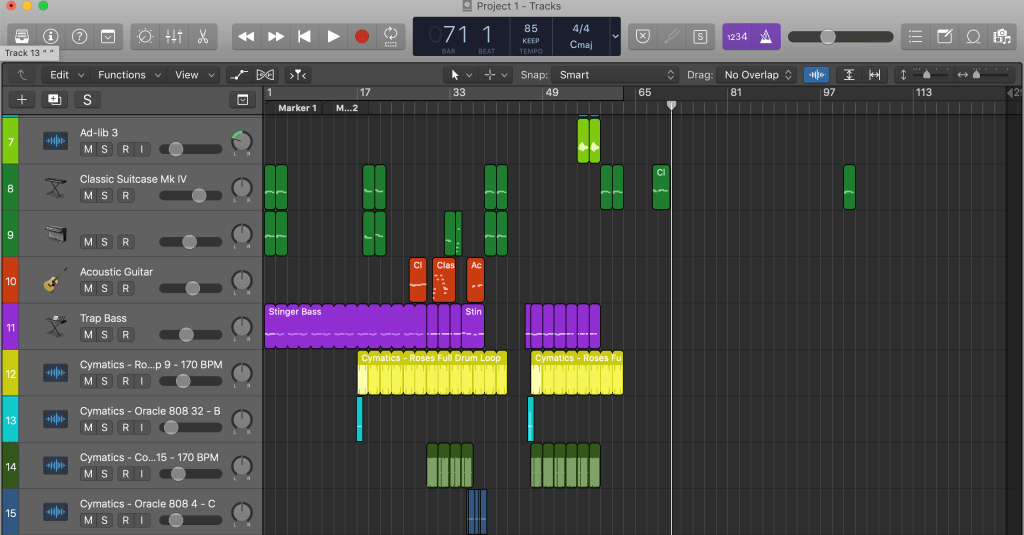
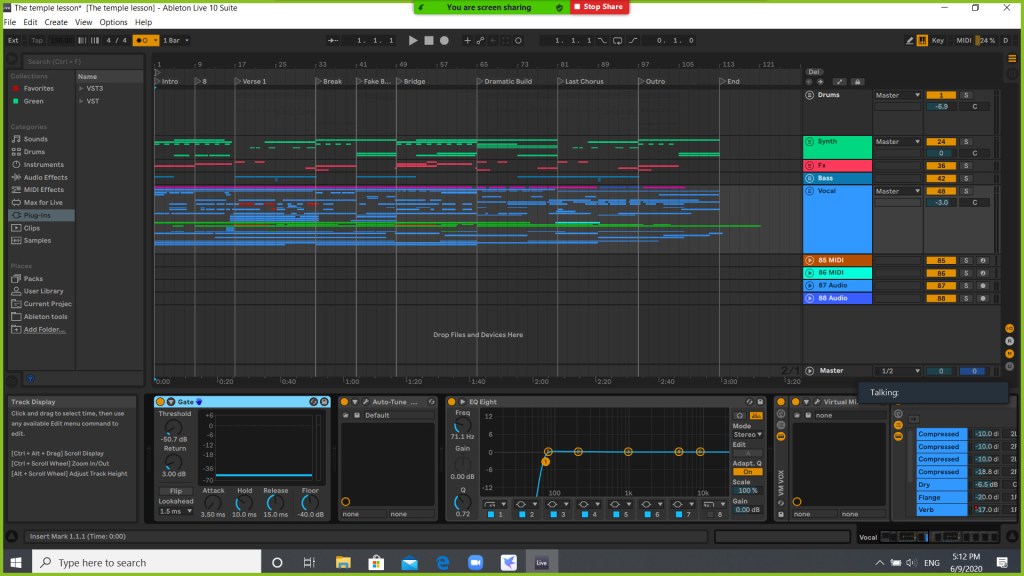
Here’s an overview of the Ableton project-
Plug-ins
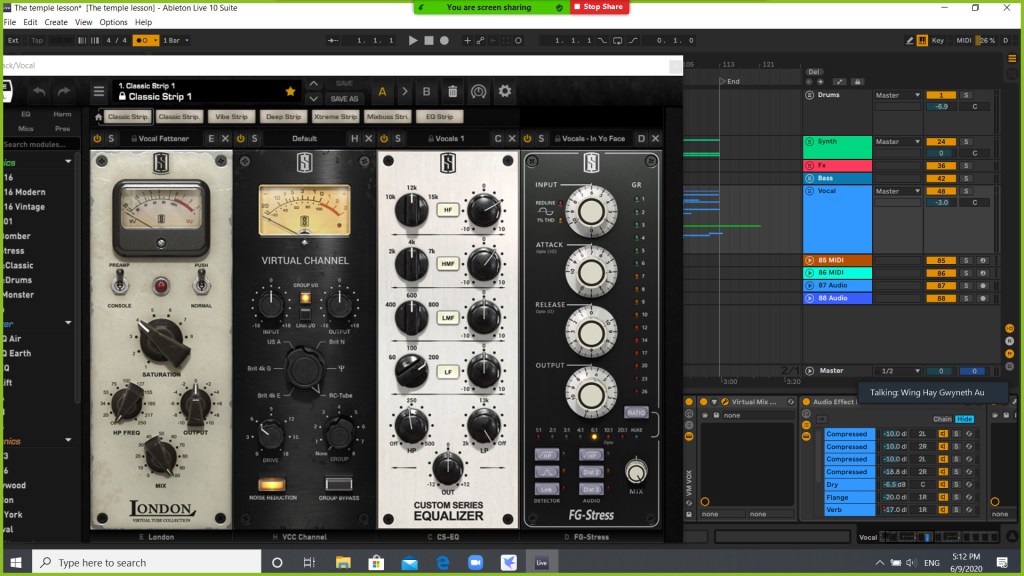
Writing

The melody and half of the lyrics were written 20 minutes when I was at the studio alone one night (think it can be categorised as “Top Line Writing” according to Ethan Hein?) It comes a bit easier than writing from scratch to match the chords, thus to sound more pleasing to the ear. I follow the steps below when I’m asked to write over a beat-

-identify the structure e.g. bar 17 to 33 are verse 1, get all basic info e.g BPM, key etc

-think of a catchy main melody, preferably with a decent amount of repetitions

-record a draft

-write (down) lyrics in a notebook

-sing over the beat and see if it’s the correct length, then make necessary changes

-record a draft

-send to producer

-then continue working on it (on zoom in this case)

– record studio vocal

-then continue working on it (on zoom in this case)

-contact featured artist and do admin things

-repeat a couple of times

My philosophy when it comes to songwriting is not to show off my “advanced musical technique”, but to make it sound as pleasing to the ear as possible. After all, musicians aren’t just here to create music for other musicians to judge, right?

Recording

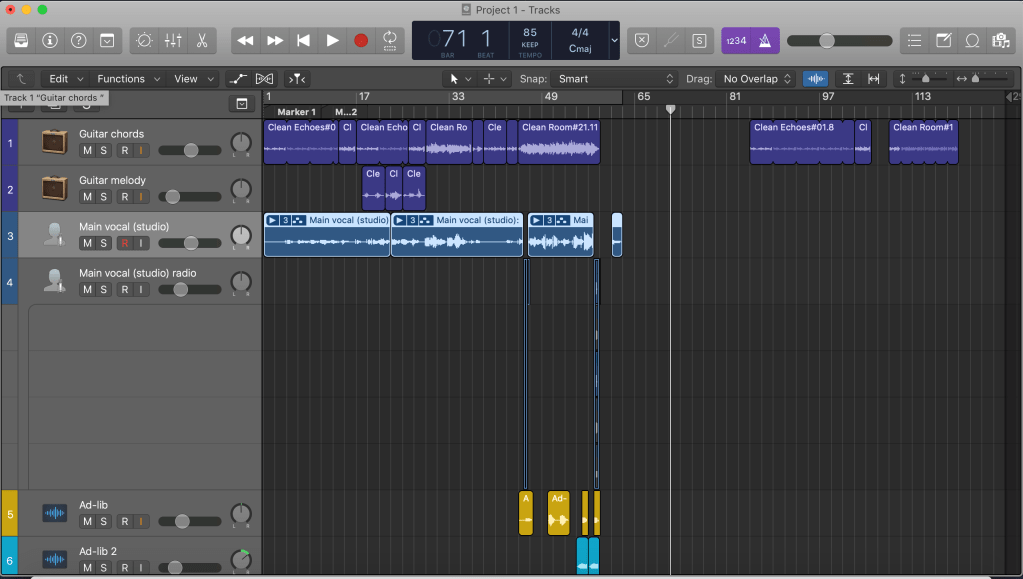
The vocals for this song was mostly recorded in the Haymarket studio. There were a few issues with my articulation because we wanted it to be SUPER CLEAR. I definitely OVERPROUNCED EVERYTHING. Timing was also something I’d been working on. Therefore, when my lease expired, I re-did those bits at home (the red bits).

Vocal processing
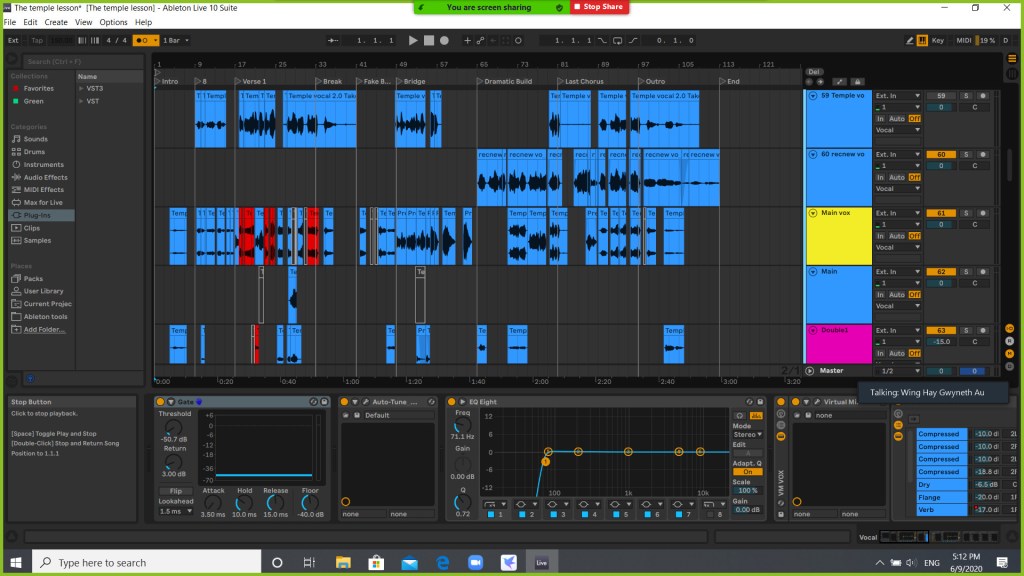
We didn’t put that much autotune in the vocals this time because quite a lot of playlist curators on SubmitHub said that Feel had too much of it.

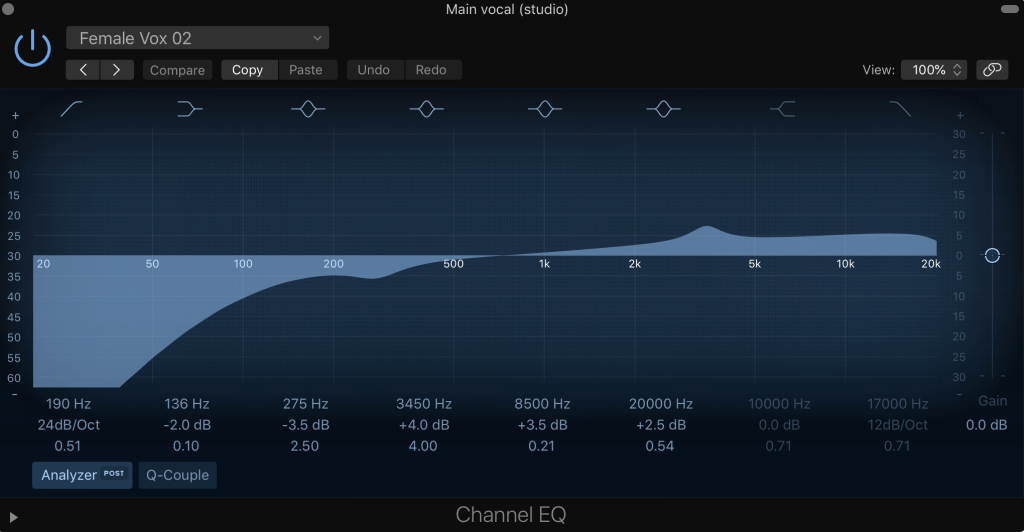
He managed to manipulate the reverb and EQ to make my voice sound really big.

As you can see in the screenshot, there’re a lot of little gaps within each take because of minor timing issues. It’s a useful skill for saving studio time because as much as I want to keep recording til I get everything right, the sessions were EXPENSIVE.

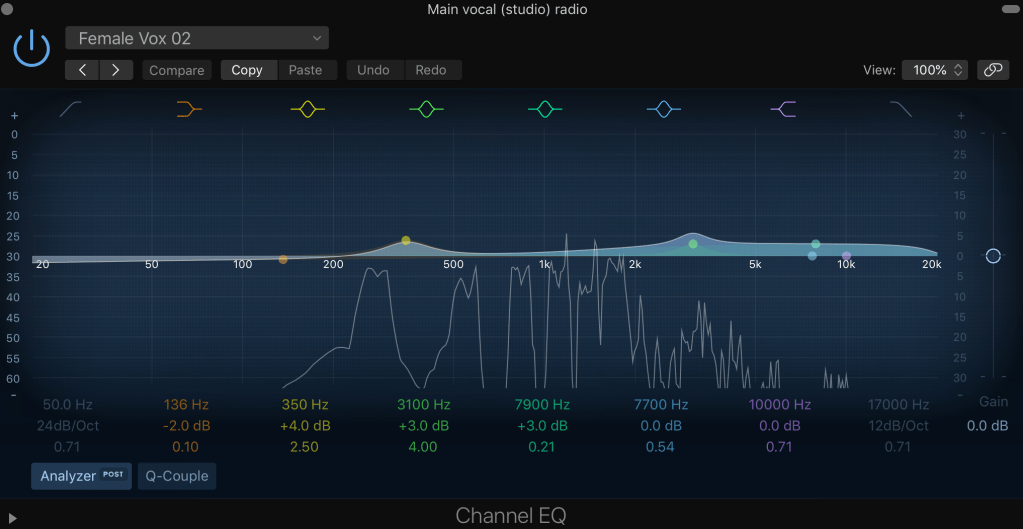
As mentioned, the radio effect has become my signature so it will probably appear in my future projects a few more times.

Another thing I’ve learnt from this project is we can use certain takes that cannot be put in the foreground in the background. For instance, the featured artist did a very metal monologue that we thought might not work. But Daniel compressed and put lots of reverb into it and it became this super cool ad-lib! (0:58)

Finished product

Pedagogical Possibilities

Interesting topic, because I actually did not formally learn to write songs. It was from years of listening, modelling works by other artists and trial and error. I do agree that music theory is a good supplement. The point is we got to think independently and be open to possibilties. Taking pop songs as an example, songwriters do follow rules like melodies matching chord progressions. However, it is also about creativity and not being limited by all the theories.

I’m yet to figure out how to create structured songwriting lessons for students. Sometimes I do find it hard to articulate my thoughts and explain musical concepts. For now, I guess I will start with the common 4-chord progression, and ask my students to write short melodies with given notes. That would be to teach them the concept of keys and chords. I will also encourage active listening to pop music because our brains do get used to certain sounds, and it is beneficial for composition.
Tech Project #2 Remix

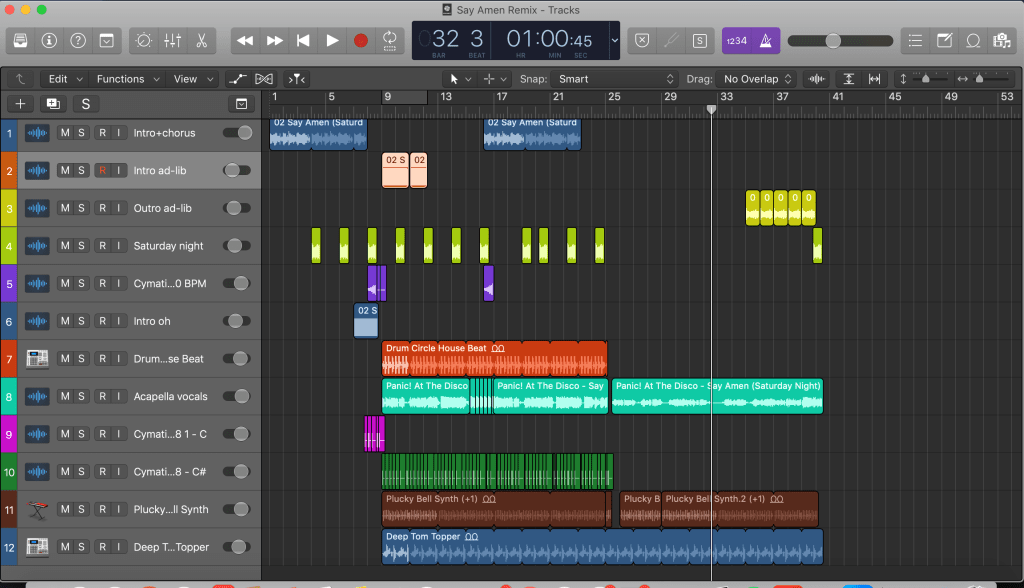
This part is an extension of Ethan Hein’s challenge. I’m actually quite happy with how the remix turned out given that it was my first attempt! Say Amen did very well on the charts, mainly because it sounds super poppy. When I attened the Sydney leg of the Pray for the Wicked Tour, the audience was an interesting mix. I had the expectation that it would be just like any other pop-punk gigs. You know, a bunch of 20 something year-olds in flannels and skinny jeans. But NO! Surely there were groups of die-hard emo fans, but there were also mainstream fans, and even kids! The rock to pop transition has been a success I’d say.

Layers

DAW

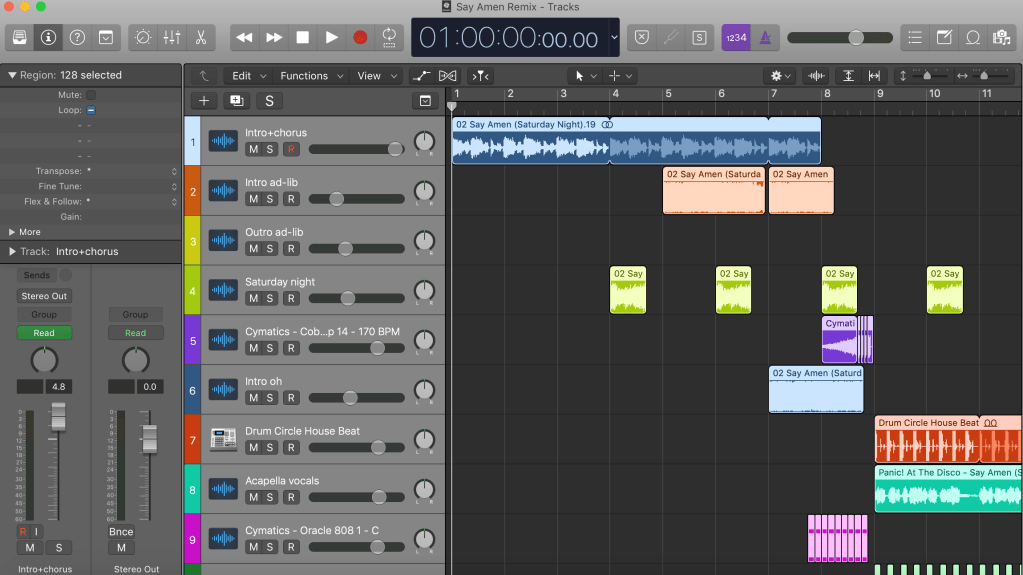
Once again, I worked on LogicPro X. Assigned a colour to each track to make them nice and clear, 12 layers in total. All loops and samples.

Vocal stems

The loops are from the original song (Track 1,2,6), and acapella vocals are from YouTube (Tracks 4&8). It wasn’t the best version but I used it anyway.

808s

This was my first time being so comfortable with 808s. For some reason they always sounded a bit off before this project, so I was reluctant to try them. All availale in the free sample packs by Cymatics.

Drum Loops

I experimented with the house beat (Tarck 12), because I saw my friend doing a house remix of his trap song. It’s not a genre I’m in or trying to get into, but it could be useful one day.

How I Made the Remix?

I’ve sort of developed some steps to stay organised and productive so it was pretty much the same as the Demi Lovato cover I made.

-Find keys, chords, BPM online

-Warp vocals and organise

-Then put 808s in

-Vocal chops+ lots of copying and pasting

-FX

-Put house beats in

-Review

-Shows the class

-Shows producer friends

-Review and keep working

This remix happened quite organically, I didn’t reference anyone’s work at all. But I will definitely explore how to make a good house drop in case anyone asks me to DJ haha

Finished Product

Pedagogical Possibilities

In a classroom setting, I think it’s definitely possible to teach kids how to remix. The only problem with younger ones is that they might struggle a bit with warping. I was thinking I should provide them with stems, and give them the freedom to put in other elements such as midi and make their own loops etc. So my approach would be giving them a “sample pack”, and a chart with basic structure of a song for each task.

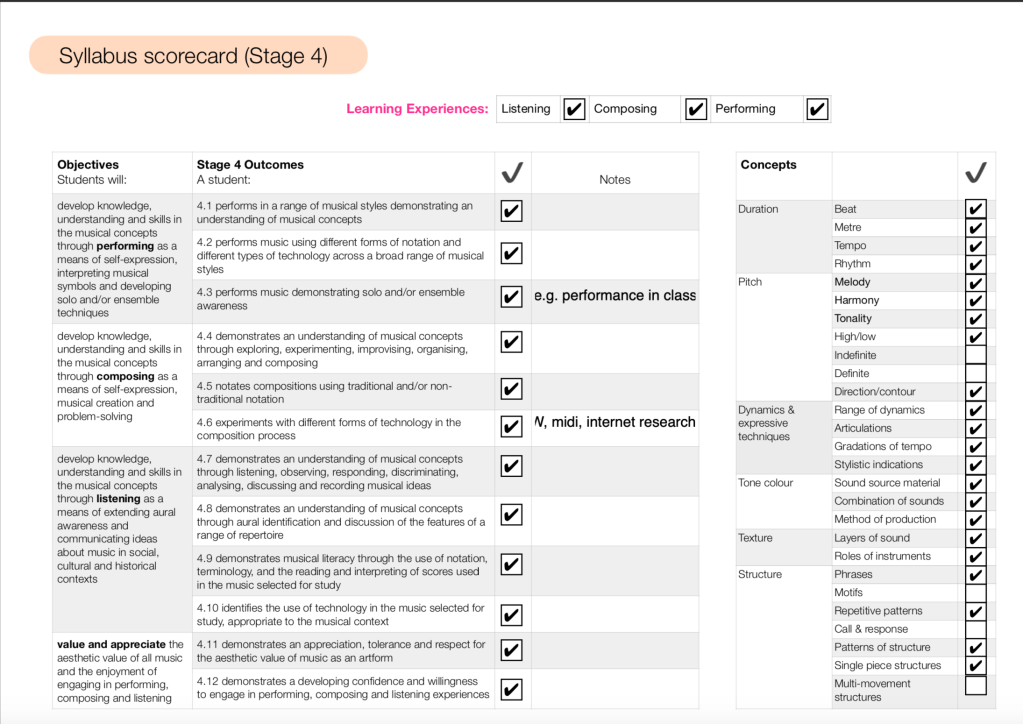
This task would be good training for timing and listening skills because they have to follow the metronome and check whether the loops are in time. Sense of rhythm is very important for musicians. Let’s say I give this task to a stage 4 class, it would tick most boxes in the checklist below-

I had a read of The Dawn of DAW by Adam Patrick Bell (2018), and it inspired me to introduce the DIY concept to students. Children these days have easy access to music technology and it would be a nice idea to integrate that with teaching and learning. There’re resources out there-books, online courses, YouTube tutorials to facilitate that. In fact, there’s a new wave in the music industry called Bedroom Pop, a lo-fi, trendy (vintage) sound that made popular on social media. Artists are mostly self-taught and they can just create music without going out at all. I’m excited to see students take up the producer role and make music they listen to every day.

Tech Project #1-Remaking a Song

I thought I should start with something simple, so I dug up an incomplete project from a year ago. I was trying to make my own version of World of Chances by Demi Lovato but didn’t have the skill to finish it. Since I’ve saved so much time during lockdown, it was the perfect timing to complete and even include it in this project!

Set-up

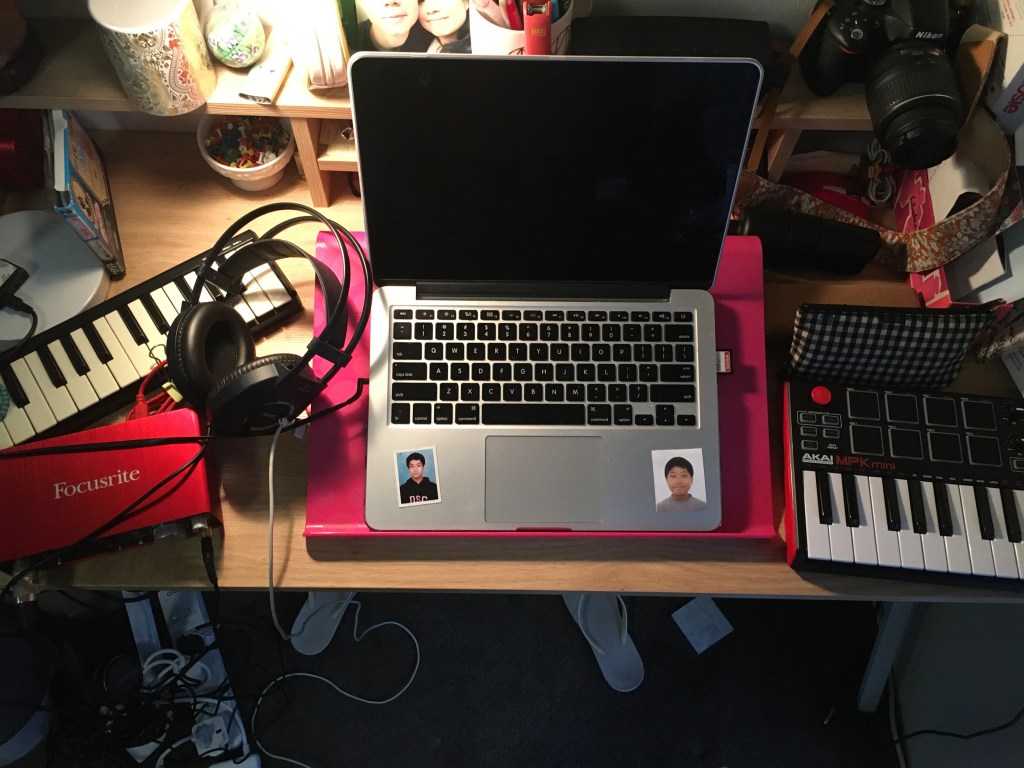
my basic set-up

Layers

Guitar

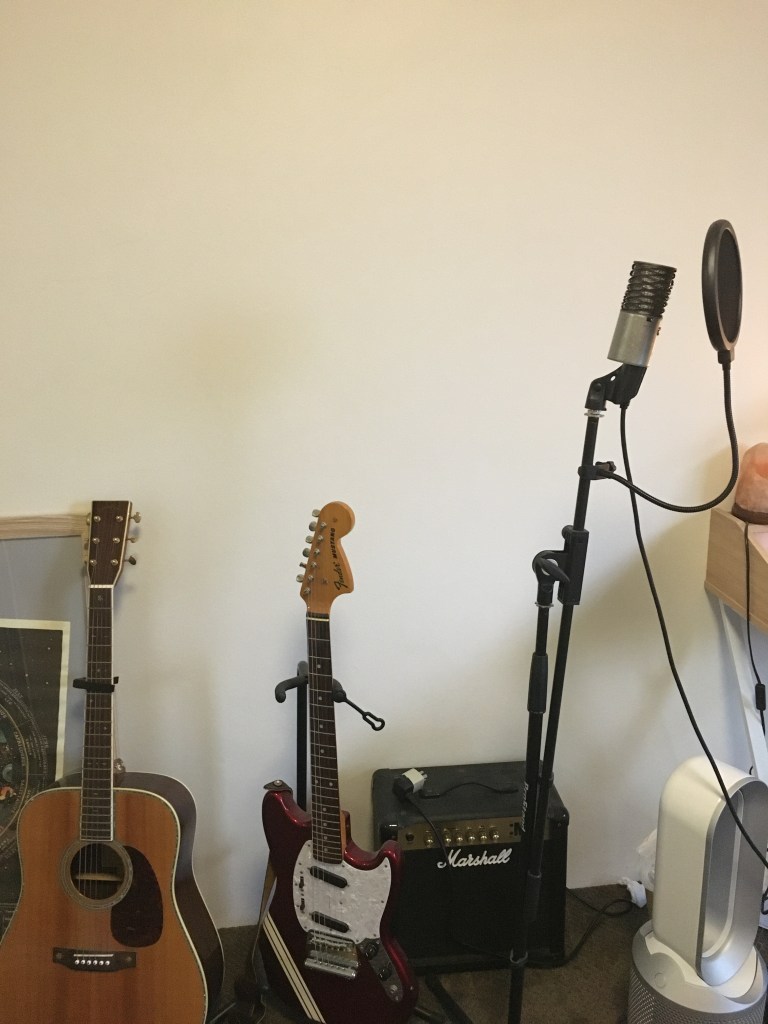
It was just my Sigma acoustic guitar plugged into my interface, typical 4-chord progression

Midi and samples

There’re 15 layers in total and the only real instrument is acoustic guitar by yours truly. Midi instruments are all from Logic Pro X, and Cymatics sample packs are free (I used Roses, Oracle and Cobra). They were all tranposed to G.

Vocals

I had a tenancy at a recording studio at Haymarket at the early stages of lockdown but unfortunately had to discontinue. However, I did manage to record some good vocal takes for this project! The dead room there was amazing 🙂

The Banks Studios https://www.thebankstudios.com/studio/

How I made the song-I’ve come up with a brief summary

-Find keys, chords, BPM online

-Start with just guitar and vocals

-Then put in midi layers

-Reference original track (this process was repeated 100 times)

-Fix reverb, EQ, volume etc

-Show people, one musician and one normie, and ask for opinions.

-and… continue

It’ll take a while for me to learn how to mix

Things I learnt from this project

I tried flexing my vocals for the first time and I was absolutely fascinated by Flex Pitch. I also got my very first plug-in-Balancer by Sonible and Focusrite to get a “bigger”-sounding vocal.

I had a bit of a hiccup with vocals sounding off and asked for help from my bf, we found out that the EQ of the main vocal was too high. We increased the depth of it and voila-

I messed with EQ to create the radio effect which is one of my favourite since Day 1 (gotta stick to my pop-punk roots you know, and you can still hear it in my songs nowadays haha).

Since I didn’t have experience with vocal processing, I looked through YouTube and found this video. It was quite good for beginners 🙂

Finished product

Pedagogical Possibilities

It’s actually inspired by my brother’s music teacher in Year 9, so I sort of got the information first hand. It’s cool that they did manage to finish the whole project with little help from their teacher. They’d be in Stage 5 in NSW, so I’d say it is doable, given that they have basic training in music.

Since the projects they did were under the Alberta Curriculum, I did some further research on YouTube to see if it can be adopted to the NSW syllabus. I noticed that their level is actually quite similar to the things we’ve learnt in music tech!

I had a look at Ethan Hein’s programme at NYU, and I reckon it’s useful for building a solid foundation for students who’d like to learn to produce. From song structure analyses, looping, drums, synth to midi, it all starts from the basics. It was how I was trained in my undergrad years (my school didn’t have music as an elective, so songwriting was mostly self-taught from listening to highly formulated Disney channel music like Jonas Brothers and Demi Lovato in the late 2000s). It is a step-by-step process to scaffold, and I would say the self-taught element is essential in music education because there’re tons of resources on the internet. On top of that, we should encourage kids to get together with other musicians and learn from them.

Traditional music education mostly relies on activities in real life, but online music teaching is so much easier if kids are used to working online. I guess that’s the takeway from more than 2 months of lockdown 🙂

In the unit of study outline for music curriculum 1 (focusing on popular music), I have adopted structure analysis, looping, and it’d be awesome to teach them how to DIY sound effect with random material. (Document attached seperately)

https://drive.google.com/file/d/14Hk-Wc8ifKaDvWQzXKmbp0WLdelU36Kc/view?usp=sharing

Week 13

Monday-Ethan Hein Guest Lecture

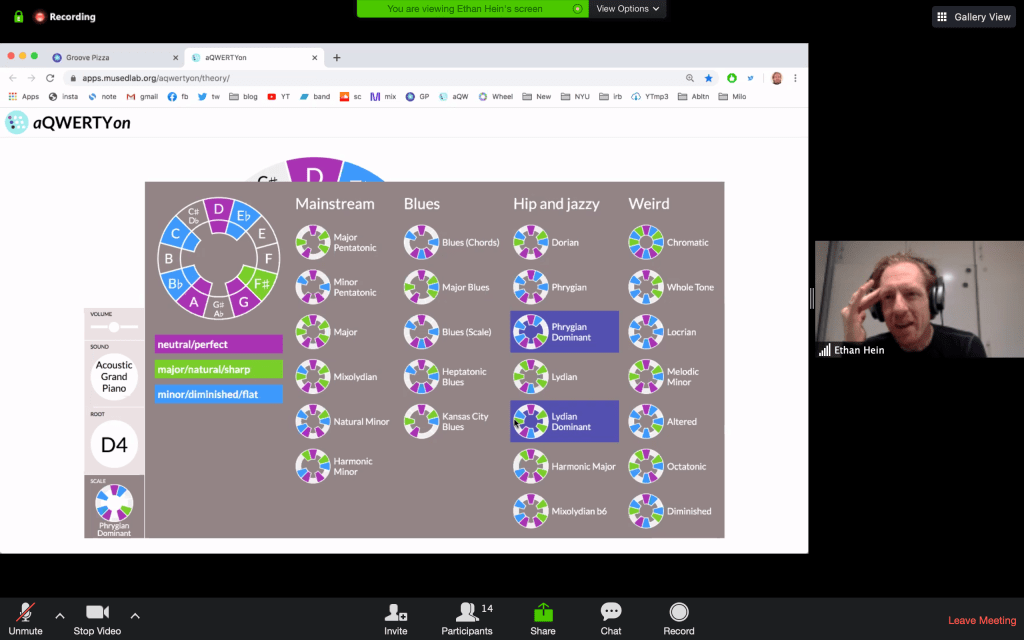
Ethan Hein from New York introduced us to Groove Pizza, a step sequencer for education which we experimented with at the beginning of the semester, and aQWERTYon, another programme by musedlab for modes, chord progressions etc. I personally enjoyed playing with the latter more.

He brought up whether these resources has made it too easy for kids. I personally think they should at least have a solid foundation on music theory before using these programmes. Just because letting them rely on given progressions doesn’t seem like a long-term method. I would still suggest learning step-by-step, in case they want to study music in high school and on a tertiary level.

However, I think kids should be exposed to music technology as early as they could. Music making has changed so much and people can even compose without using any real instruments. It’s beneficial for musicians and aspiring musicians to be more connected with current trends and at least get to know how music everybody listens to is made.

Wednesday-Ethan Hein’s Challenge

We were given a task to make something new out of a song on our iTunes. I decided to make a remix of Say Amen (Saturday Night) by Panic! At the Disco because my brother puts 3 of their albums on my laptop and they were literally the only songs I have. I felt super ocd and changed the colours of all the tracks too haha

For this short track, I mainly played with the intro and ad-lib, and cymatic drum loops and 808 from the free sample packs.

I honestly had more fun with the music tech unit than I anticipated. One of my goals for this year was to work on my production skills, and I didn’t expect to have the opportunity to do so in this course! And I didn’t even know it’d be possible to integrate digital music with classroom teaching. Can’t wait to see what MTeach has to bring next semester!

Week 12

Monday-study techniques

James gave us a lecture on study techniques which involves organisational skills, highlighting etc. It is very essential because a) it saves time and b) you can keep track of your progress and notes, thus prevents unnecessary frustration

I’ll definitely try the citation managers because they will come in handy when I write my papers. Also, note taking software such as OneNote and Devonthink help organise notes and they seem very convenient. I find it quite hard to remember what my readings are about so I will start utilising these resources next semester!!

Wednesday-Time Management(?)

I believe we talked about time management and productivity in Wednesday’s class. It was especially useful for our quarantine lives and those who have flexible schedules.

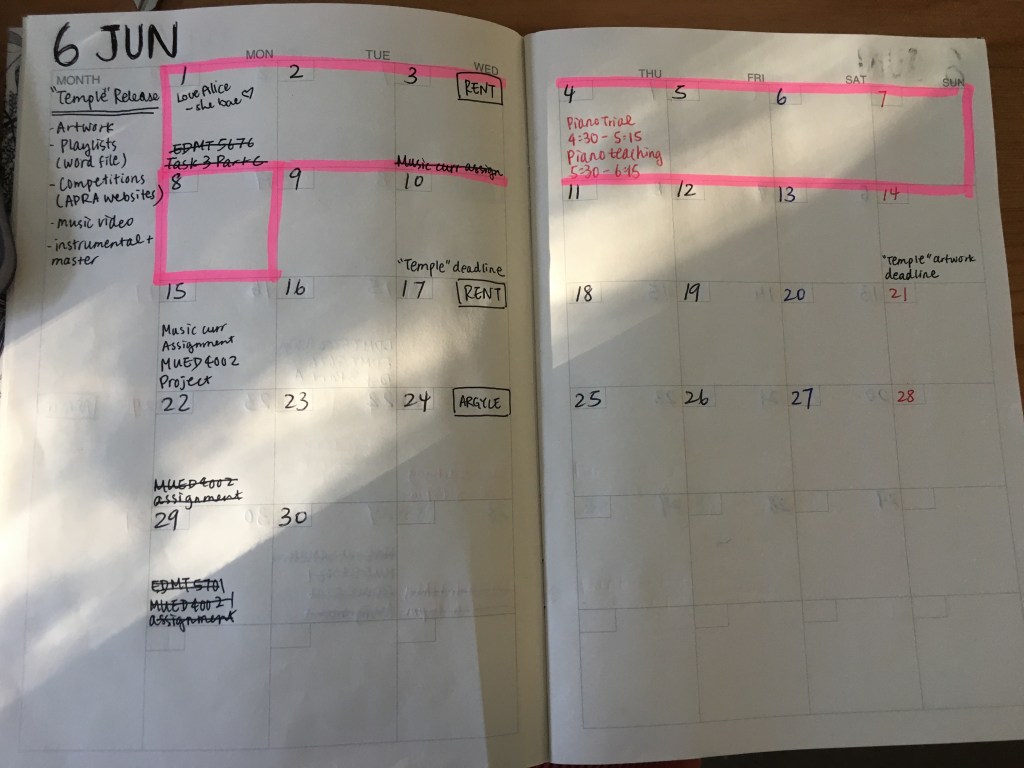
I personally do most fo the things James mentioned but less hi-tech. I have a diary which has an overview of each month. At the start of the year, I’d put down all the holidays, deadlines and important events. Then, at the beginning of each month, I’d do a review and further planning.

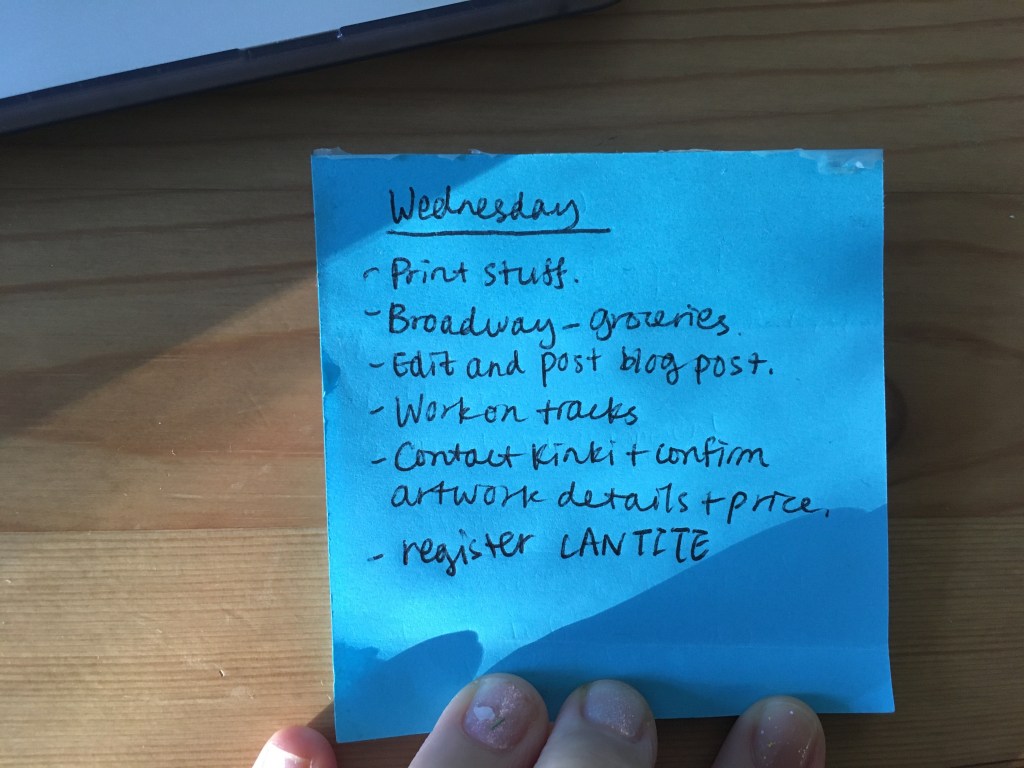
I went through the “unproductive period” just like everyone else at the early stage of lockdown. However, I realised how much I could actually get done just being at home. Therefore, I began to give myself a to-do list every day, and it WORKED! My friend calls me “Spreadsheet Queen” lol but honestly, having some tasks to finish every day helps me stay motivated and on track!

Week 11

MondayAbleton Live school

Today we watched a video of Ableton Live School . It’s a training centre in Sydney that provides music production courses. It’s quite a new concept (at least in Sydney) because they are only focused on one.thing.!!! And it’s something that traditional institutions might not be able to provide!

I like the idea of them employing people in the industry as instructors because that’s how students get to know what it’s like to be musicians at this time. I might be biased but I had a feeling that some music teachers were quite detached from the field. It is definitely a plus if teachers could stay active and creative while providing students with updated resources and network.

Wednesday-Project vol. 2

I’d decided what to do for my project! Since I’ve been hiding in my cave a.k.a my bedroom for the longest time working on my production skills, I thought it’d be a good idea to use my work for this assignment!

So my plan is to submit 3 tracks for my music tech class, and come up with a unit of study (for music curriculum ext. 1). Not gonna lie, I’m not the best at planning lesson so I will need some more help haha! I’m surprised that teachers should show the kids that we’re real musicians haha. Think I need to do more reading on it.

Week 10

Monday-Project Ideas

Week 10 woohoo! We discussed our plans for our final projects this week. We could either do 2 separate ones or a combined one. I was pretty sure I wanted to do some production work since it’s something I’ve been trying to polish since lockdown began. However, I wasn’t sure how I could apply it on teaching. Guess I’d need some more time to think!

Wednesday-Ableton Live!

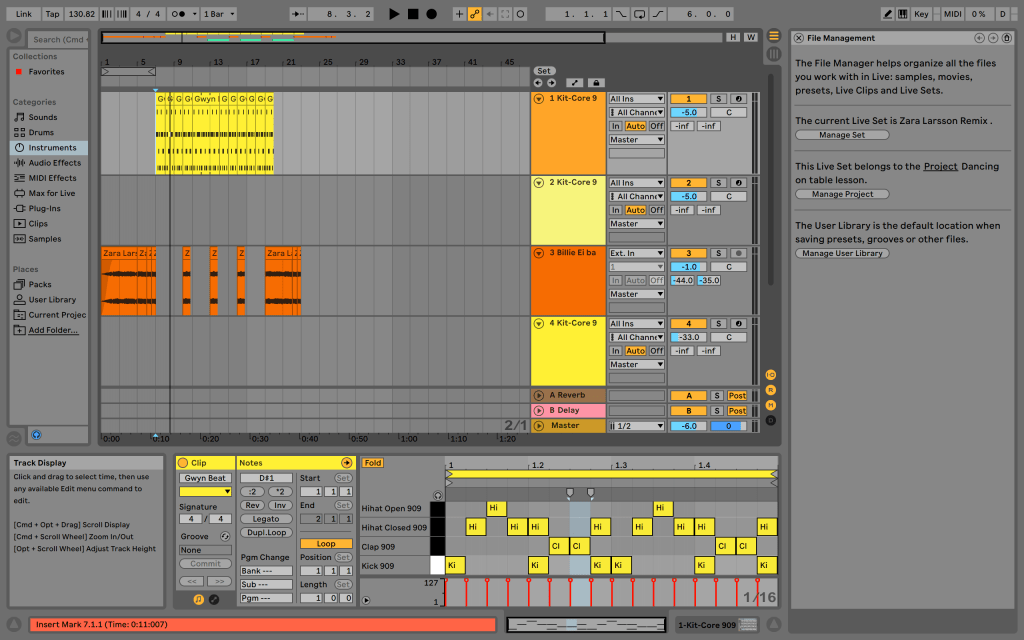
We received a free 90-day trial for Ableton Live! And James gave us a bunch of loops to play with. Fun fact-my songs are made on Ableton since the two producers I’m working with are too cool for Logic Pro! It took me a while to familiarise myself with the layout because it was quite different. Here’s a glimpse of my Zara Larsson remix-

For some reason I decided to only put in 2 layers lol The beat was made on this free website and the “melody” part was just the intro. The whole thing sounded SO OLDFASHION OMG. Overall, it was quite an interesting experience because of how hard I found it haha I wonder if people who started out using Ableton would find Logic Pro more complex! I’m quite keen to experiment on kids hahaha

Week 9

Monday-BYOD

BYOD, ‘Bring Your Own Device’ programme allows students to bring their own electronic devices to school. It’s become more popular in high schools. In my days, personal electronic devices were pretty much banned on school ground so unfortunately I don’t have any experience with it. But my brother (16)’s been to both a 1-to-1 and a BYOD school! The former got iPads for everybody but did not give them access to the App Store or “bad websites”, and the latter has absolutely no restrictions at all!

I got to interview him and he seemed to be happier with BYOD, since he got to choose the model he liked the most. Google Classroom also became quite handy during the pandemic for video conferences and homework. However, I’m pretty sure it potentially distracts the kids even more since they can literally go on any websites. Maybe 1-to-1 is a better idea after all, since it also eliminates the chances of comparisons among kids from different socio-economical background.

Wednesday-ReverseGarbage

woah woah woah

Upcycling WHAT

ok so basically we were told to create our own instruments and I was too reluctant to touch my recycling bin for obvious reasons. Therefore, I grabbed my mason jar (hipster i know), a protein shake cup, a fork, a chair and tried to play around. I found out that hitting these items can give out different tone and timbre, and it’d be good for explaining these concepts to the class.

I recorded videos of myself hitting the stuf and edited them on Filmora which I regret (it kept lagging) over an acapella track of Sucker by the Jonas Brothers my boyfriend found on YouTube. I think it’s the original vocal track people found online or something https://www.youtube.com/watch?v=Cs5u4wfCakE. It would be a cool activity for high school kids trying to get into production and video editing. I will probably look for more acapella tracks as they’ll be useful for future remix exercises.

Week 8

Monday-Gamification and DGBL

My mum called before the class started asking what I was going to learn. “Learning through games”, I replied. “Oh! Gamification is it?” Whatttt??? I could not believe she knew what it was. It turned out to be a big thing in human resources (her job) BECAUSE apparently young people these days have trouble focusing at work (lol) so they have to figure out fun ways to train up new staff members.

Anyway, we started off playing a game called Bemuse and it’s similar to a rhythm game my high school friends were OBSESSED WITH. There was an interactive version at an arcade near our school which I think kids would be interested in. It’d be cool if we could bring that into the classroom one day.

Link: https://www.youtube.com/watch?v=OY6sEIGePXw

Rebecca came in and shared her research on the concept and how it would benefit teaching and learning. She mentioned that turning a learning task into a game would increase the engagemnt of kids. This will be a cool topic to explore and a personal challenge since video games were FORBIDDEN in my house haha

WednesdayThe Maker Movement

We talked to Phil Nanlohy who runs a Makerspace at a school and he’s set up a workshop there to teach kids how to create things as part of the STEM programme.

The primary school I went to in Hong Kong (back in 2007ish) had this after-school programme for “gifted students” and our task was to design a windmill (JUST LIKE THE EXAMPLE PHIL GAVE). It was just a government subsidised Catholic school and my friend and I did so much research to create the best one. I bought a motor at a motor car shop, figured out how a closed circuit worked and installed it in a cookie box. It turned out to be the coolest thing ever!!Oh wait we somehow got a fan and a windmill mixed up haha… Sometimes kids just have to teach themselves and learn from experience. Hands-on projects like Makerspace is exactly what I’ve been looking for, as a student and pre-service teacher.

An awesome class overall!

Week 7

Monday

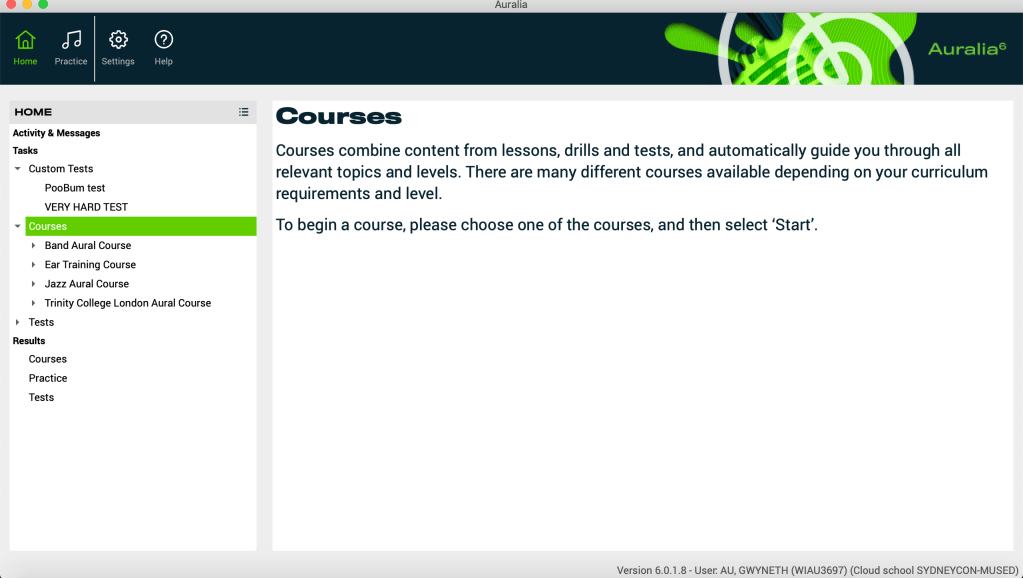
On Monday, we had a zoom meeting with Peter Chan, founder of Auralia, the software for aural tests. It was really cool that he gave us free access and went through the basics with us. So basically you could come up with questions there and it makes marking homework wayy easier. One of my favourite features is the presets for different tests like Jazz and Trinity. I always found it a bit hard to practice aural for my piano exams growing up. Now I’m glad students don’t have to only rely ont their teachers for that!

Wednesday-Phew Easter

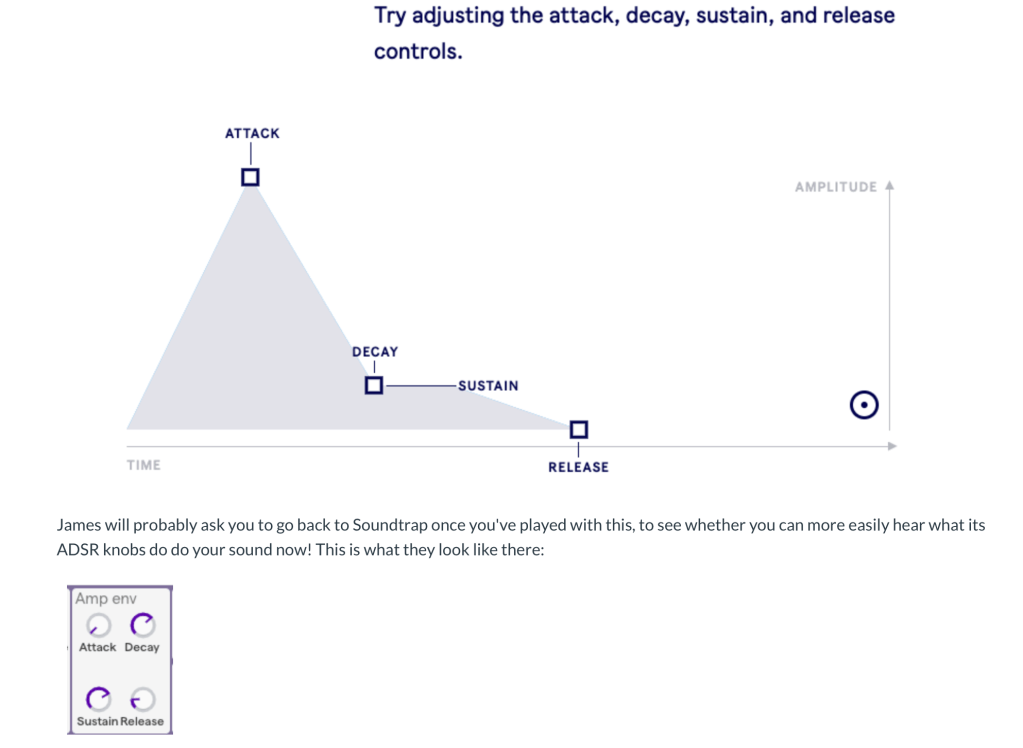
Wednesday was a good class and I feel like a learnt A LOT from it. We did some revision on the biology and physics of sound. The best part of the whole class, in my opinion, was when we learnt adjust the attack, decay, sustain and release on Ableton. It’s neccessary in production because we want to imitate real instruments as much as we can. I’ll definitely experiment more in my own time.

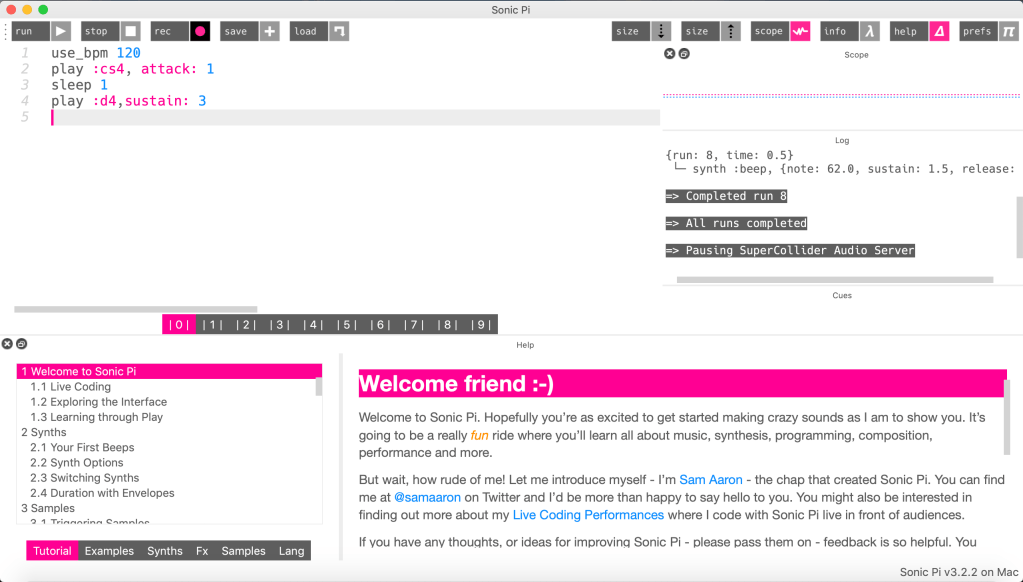
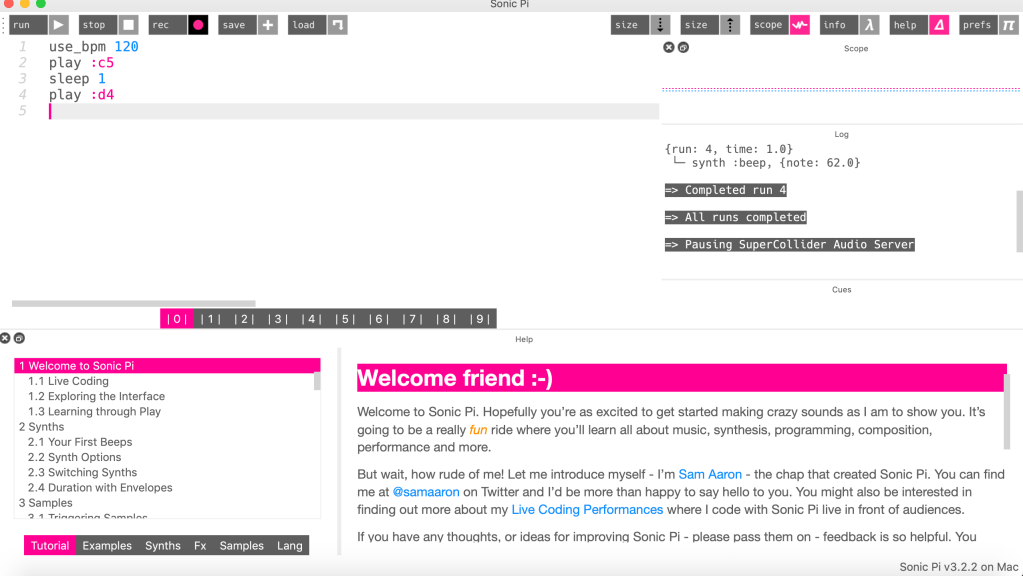
Rowena Stewart from Sonic Pi joined our meeting for the last 30 minutes (?) and we had a play with the programming software. Some people say music is just maths so hopefully it’ll be a fun activity for students who have the “math brains”!

Design a site like this with WordPress.com
Get started