Music 2 HSC (Year 12)-Music of the Last 25 Years (Australian Focus)
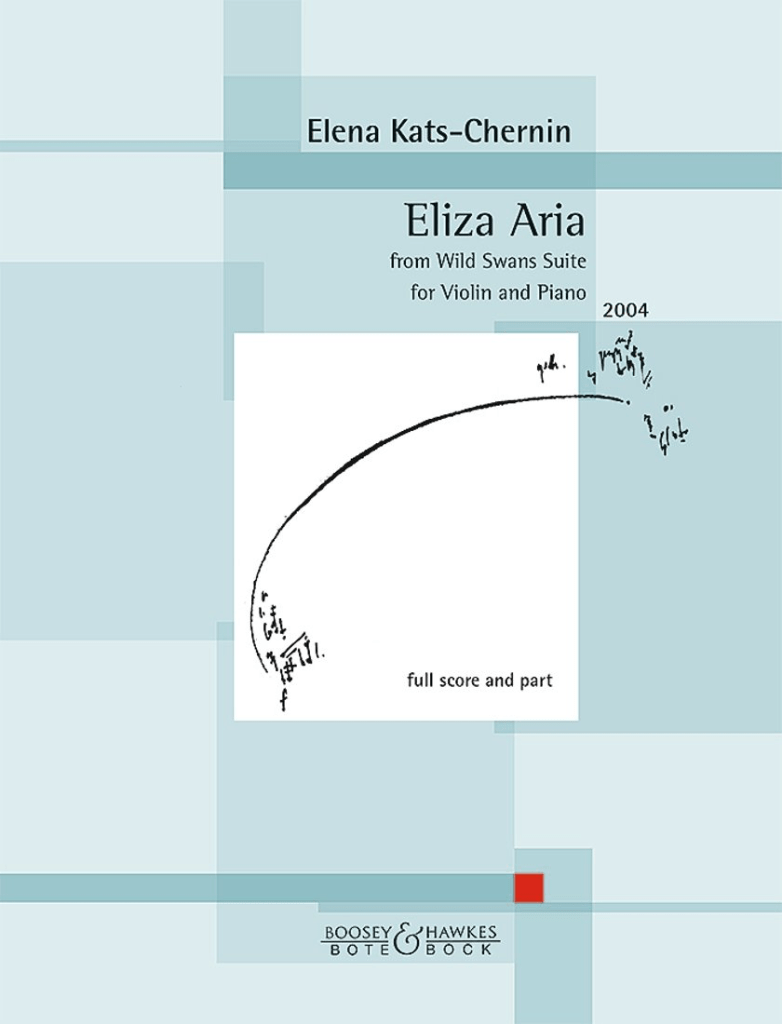
Title: Eliza Aria for Piano Trio
Composer: Elena Kats-Chernin
Year of Composition: 2002; this version 2012
Duration: 2:58
Instrumentation: Piano, violin, cello
Let’s begin the lesson by listening to a recording by the Streeton Trio:
Eliza Aria piano trio (original score)
About Elena Kats-Chernin
Artist website: http://www.myspace.com/elenakatschernin
Born in 1957 in Tashkent (Uzbekistan), Elena Kats-Chernin received training at the Gnessin Musical College before immigrating to Australia in 1975. She graduated from the New South Wales Conservatorium of Music in 1980 and was awarded a DAAD (German academic exchange) grant to study with Helmut Lachenmann in Hanover. She remained in Germany for 13 years, returning in 1994 to Australia where she now lives in Sydney.
Elena Kats-Chernin has created works in nearly every genre. Among her many commissions are pieces for Ensemble Modern, Australian Chamber Orchestra, Australian World Orchestra, the Adelaide, Tasmanian, Melbourne and Sydney Symphony Orchestras, the Australian Brandenburg Orchestra, City of London Sinfonia, Swedish Chamber Orchestra and the North Carolina Symphony.
Her colourful, energetic, and often propulsive music has been choreographed by dance-makers around the world. In 2000 she collaborated with leading Australian choreographer Meryl Tankard on Deep Sea Dreaming which was broadcast to an audience of millions worldwide as part of the opening ceremonies of the Sydney 2000 Olympic Games.
Works from the following years include the concerto for basset clarinet and chamber orchestra Ornamental Air which has been toured internationally and also released on CD for Chandos by Michael Collins and Five Chapters, concerto for saxophone quartet and orchestra, composed for the Rascher Saxophone Quartet. For the Australian Brandenburg Orchestra and choir, she composed Prelude and Cube in 2015.
Kats-Chernin’s music continued to be heard on TV and at the cinema in the UK with the long-running Lloyds TSB advertising campaign ‘For the journey…’ employing Eliza Aria from her ballet music to Meryl Tankard’s Wild Swans. Her piece Russian Rag became Max’s theme in the claymation film Max & Mary by Adam Elliott.
In 2011 Kats-Chernin was appointed composer in residence with the Queensland Symphony Orchestra. Her first symphony, Symphonia Eluvium for organ, choir and orchestra, commemorating the devastating Queensland floods of January 2011, was premiered that year by QSO conducted by Asher Fisch at the Brisbane Festival. In 2012, the work was voted by the readers of the Australian monthly arts magazine Limelight as the best composition of the year.
Elena Kats-Chernin is one of the subjects of a Creative Minds 6-episode series of artist portraits. The documentary by Robin Hughes was made for Australian TV’s STUDIO channel. A double CD of her complete music for string quartet, performed by Acacia, was released under the title Blue Silence by Vexations840 in 2012.
One of Elena Kats-Chernin’s most recent major premieres was her adaptation of Monteverdi’s three operas (Orpheus,Odysseus, Poppea) at the Komische Oper Berlin, directed by Barrie Kosky, in September 2012 – a 12-hour marathon performance with live telecast on 3sat TV.
In January 2014, her music for the drama Frankenstein at the Sydney Ensemble Theatre won jointly the Sydney Theatre Award 2013 for the Best Score. In March 2014 she was a joint winner of Sidney Myer Performing Arts Award.
Her opera Schneewittchen und die 77 Zwerge opened at Komische Oper Berlin on the 1st November 2015. The dance piece Three Dancers, choreographed by Didy Veldman to Elena’ Kats-Chernin’s music, had been premiered at Sadler’s Wells by Rambert Dance Theatre Company, London, on the 3 November 2015.
Her TV opera in 4 episodes The Divorce was nominated for ACCTA (The Australian Academy of Cinema and Television Arts Awards) in the category Best Music for Television. It was produced by the Opera Australia, ABC TV and Princess Pictures and broadcast in December 2015 on ABC TV. The cast included Kate Miller-Heidke and Meow Meow.
Among her most recent premieres was The Witching Hour, a highly acclaimed concerto for eight double basses for the Australian World Orchestra, performed at the Sydney Opera House in September and at the Esplanade Concert Hall in Singapore in October 2016. Her Singing Trees for the Australian Chamber Orchestra was premiered in December 2016 at the Melbourne Recital Centre.
In 2016 Shobana Jeyasingh’s dance work Material Men redux was premiered with Elena Kats-Chernin’s score performed by Smith String Quartet. The original, shorter version of this piece, titled Material Men, was premiered a year earlier at the Southbank Centre in London.
Kats-Chernin’s CD Butterflying (piano works for 4 hands, with Tamara-Anna Cislowska, ABC Classics) was at the top of ARIA Classical Core Chart for 13 weeks, reaching number 1 in September 2016. Her most recent recording Unsent love letters-meditations on Erik Satie (Tamara-Anna Cislowska, piano solo, on ABC Classics) debuted at number 1 on the ARIA Classical Chart in March 2017. In April 2017 this album got released on the Deutsche Grammophon label.
In 2017 she is a composer in residence with the Melbourne Symphony Orchestra, with five performances of her work, including two premieres (harpsichord concerto Ancient Letters and Big Rhap in May 2017).
Elena Kats-Chernin’s music is published exclusively by Boosey & Hawkes
Via the Australian Music Centre
About this Piece:
I wrote the piece firstly as part of the ballet “Wild Swans” choreographed by Meryl Tankard for Australian Ballet. Originally it was for soprano and orchestra and had its premiere in 2003. The piece introduces princess Eliza and expresses her pure soul, innocence and faith in the good of the world. The piece is light in texture and uses very simple harmonies (it starts with just 3 chords A minor-C major-F major).
Since then I transcribed it for piano solo, as well as for string quartet, clarinet quartet, violin and piano, clarinet and piano, flute and piano, etc… Due to the use of the original version in a TV advertisement in UK, it became well known there and has since been remixed by Mark Brown as well as other DJ’s, as well as made into a pop song (called “The Journey Continues” sung by Sarah Cracknell).
- Elena Kats-Chernin 2007 (via the Australian Music Centre)
Activity 1-Let’s play!
Let us learn more about the piece by learning how to play it!
Here is a copy of Eliza Aria piano trio (original score) for your reference.
and here’s a copy of the classroom arrangement I made for YOU!
You can learn your part by solo-ing it on MuseScore 😉
If you don’t read traditional notations, please listen to the playbacks and learn by 👂🏼
Once you’ve learnt your part, it’s time to jam with your friends.
Activity 2-Let’s Improvise
As you perform the class arrangement, try to think what other arrangements we can create for Sections A & B using different instruments
Here are a few things you can consider:
What is the tonic of the piece?
What notes does the vocalist do for the main melody?
If you are to improvise the main melody, what scales could it be written in?
Finally, use this pitch to come up with a new melody. Mute the voice part on MuseScore, and play it over the piano and cello parts!
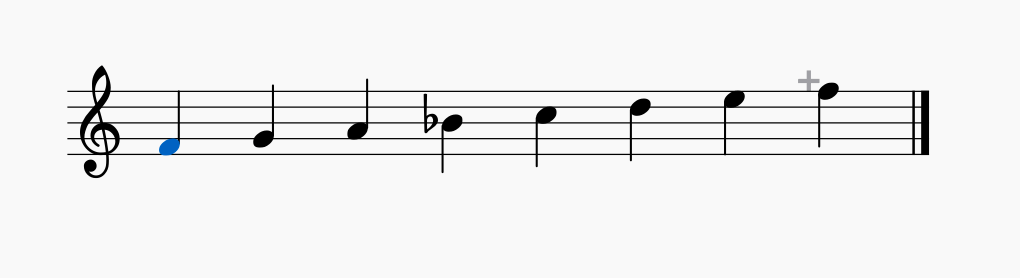
Concert Pitch instruments
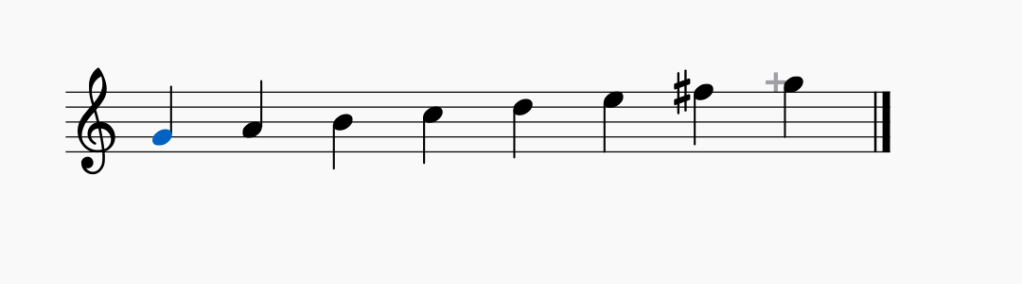
Bb instruments

Eb instruments

Instruments in A
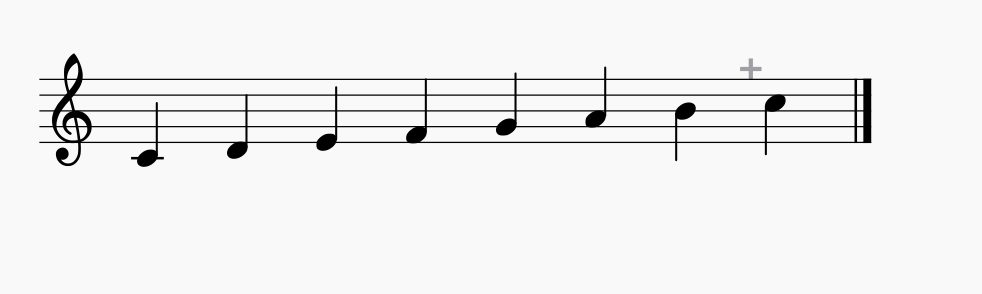
Instruments in F
Activity 3-Make your own version
How does each instrument contribute to the tone colour and texture?
Now, using the GarageBand template on the iPad provided, please record your version of Eliza Aria!
You are free to record your improvised melody, experiment with different instruments, and even add percussion!
If you prefer to use your own DAW, here’s the midi file
Activity 4-Listening and Analysis
Now let’s listen to the piece again while reading the listening guide below
| Concepts | Musical features |
| Structure | Intro – 5 bars A – bars 6-32 repeat 4 bar passage with textural variation. B – bars 33-57 new themes introduced over cello pedal. Bars 58-74 introduce chromatic harmonies over clearer texture. A – bars 74-84 brief reprise of theme A C – bars 85 – 114 new theme in violin climaxing in double stops Coda – bars 115 – 120 in D major |
| Duration | -2/2 time signature, 2 mimim beats per bar, regular bar lengths, moderate tempo. -The tempo is fast due to the continuous quaver pulse, although is -technically only moderate when counting in 2/2. The melodic lines are syncopated. Repeated rhythms used throughout. -The opening pizzicato syncopated motif is fragmented and repeated in violin 2 over pedal notes, which recalls the opening. |
| Pitch | -The tonality is A minor -Articulatory variances such as staccato achieved by pizzicato and legato thorough arco alter the timbre accordingly. The roles of the instruments are shared throughout, although it begins with the violin 1 holding the melody whilst the accompanying strings provide harmonic support. |
| Tone Colour | -The cello (bass) contrasts with the treble strings in relation to pitch and timbre. -Arco is contrasted with the pizzicato which provides contrasting colours. -Various registers are employed throughout. |
| Texture | -The texture is considerably thinner due to the limited number of textural layers with only 3 instruments playing. -It remains homophonic throughout with the violin playing the melody to begin with, and then it is shared with the piano and cello. -The remaining accompanying instruments provide harmonic and rhythmic accompaniment. -Contrasts in texture are achieved through dynamic contrast, articulation and expressive techniques such as pizzicato. |
| Dynamics and expressive techniques | -The dynamic level is Mezzo forte – moderately loud -The articulation is consistently staccato due to the pizz. The rhythm is syncopated through the use of quaver rests in the violin 1 part, utilising a short repeated rhythmic motif. -The violin 2, viola and cello provide rhythmic stability as their rhythms are all played on the beat with an emphasis on beat 1 with simple crotchets and minims used. -An anacrusis is also utilised in the violin and cello which further emphasises the down beat. |
To ensure you have a full understanding of Eliza Aria, please create a video linking the points above, as well as further research to the score , putting the knowledge in context. We will be watching the videos in class altogether!
 Kidz! Music!